


Highlights
- Apple has halted development of its Vision Air headset, originally planned for 2027, to prioritise AI-powered smart glasses.
- The first-gen Apple smart glasses are now expected in 2026.
- These glasses will feature Apple Intelligence, multiple cameras, and customisable frame options, but no built-in display.
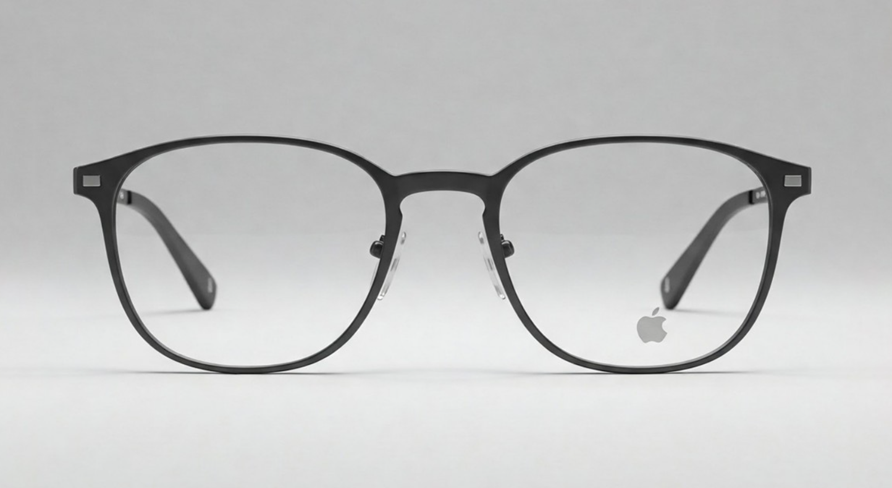
Caption – Apple’s smart glasses mass production could reportedly begin as early as 2026. (Image credit – GSMArena)
Apple appears to be shifting its wearable strategy and shelving its planned Apple Vision Air headset in favour of accelerating work on its upcoming AI-powered smart glasses. Here’s the full report.
Vision Air Put on Hold
Earlier this year, analyst Ming-Chi Kuo revealed Apple’s roadmap for future wearables, which included a lighter and more affordable Vision Air headset targeted for launch in 2027. However, according to a new Bloomberg report, Apple has now suspended development of Vision Air and reassigned engineers from that project to focus on its smart glasses initiative.
The move signals Apple’s intent to speed up development of its Meta Ray-Ban competitor with expectations that the glasses could arrive earlier than initially planned.
Smart Glasses Now Expected in 2026
Originally, Apple’s smart glasses were projected to enter mass production in the second quarter of 2027. With the company now prioritising the project, Bloomberg suggests mass production could begin as early as 2026.
The first-generation Apple glasses will not include a built-in display but will feature Apple Intelligence integration alongside multiple cameras to enable Visual Intelligence functions. Users will also get various frame and temple finish options, enhancing personalisation.
Beyond smart glasses, Apple is also developing extended reality (XR) glasses equipped with liquid crystal on silicon (LCoS) displays, gesture support, and voice controls. These more advanced glasses are expected to begin mass production by the second quarter of 2028.
Apple’s current flagship headset is the $3,499 Vision Pro and it debuted in February 2024 with significant hype. However, sales momentum has slowed, partly due to limited mainstream content and the availability of more affordable alternatives such as Meta’s Quest.
What Does This Mean?
Apple’s strategic pivot comes just weeks after Meta unveiled its latest wave of consumer smart glasses. At September’s Meta Connect event, CEO Mark Zuckerberg introduced the company’s first $800 smart glasses with a built-in display and a new wristband controller. Meta also announced Oakley-branded Vanguard glasses, aimed specifically at athletes.
By pausing work on Vision Air and fast-tracking smart glasses, Apple is clearly positioning itself to take on Meta in the growing AI wearables space. If the accelerated timeline holds, Apple could deliver its first-generation smart glasses by 2026, potentially reshaping the battle for dominance in consumer AR and AI-driven eyewear.
FAQs
Q1. Why has Apple halted development of the Vision Air headset?
Answer. Apple paused Vision Air to prioritise its AI-powered smart glasses, reassigning engineers to accelerate work on this new wearable expected to launch earlier.
Q2. When are Apple’s smart glasses expected to be released?
Answer. Originally slated for 2027, Apple’s first-gen smart glasses may now enter mass production in 2026, featuring Apple Intelligence and multiple cameras but no display.
Q3. What other wearable tech is Apple working on?
Answer. Apple is also developing advanced XR glasses with LCoS displays, gesture support, and voice controls, expected to begin production by mid-2028.