


Highlights
- Apple is working on its own AI server chip, called Baltra, to power new AI services. This move will help Apple rely less on outside hardware like GPUs and give it more control over performance and its ecosystem.
- Apple plans to increase its advanced chip production and aims to secure up to 60,000 wafers per year by 2027. The company will use 3nm technology and SoIC packaging to reach this goal.
- With these new chips, users can look forward to faster AI features, stronger privacy, better battery life, and a smoother experience on Apple devices.
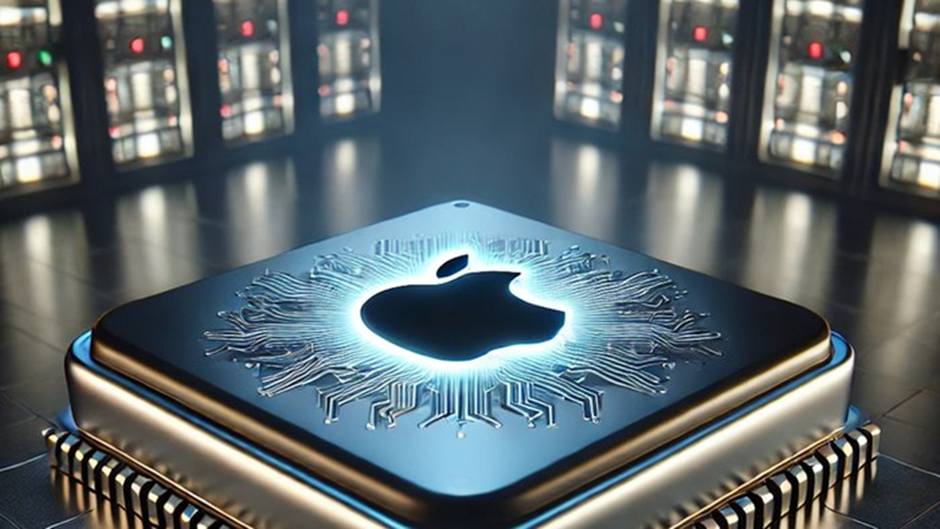
Caption: Apple Eyeing Partnership with TSMC to Develop Its Own AI Chip ‘Baltra’ (Pic Credit: The Tradesman)
Apple is moving fast with its in-house AI server chip, Baltra, as part of its goal to lead in artificial intelligence. By teaming up with TSMC and Broadcom, Apple expects this chip to change how it runs AI on its devices and in the cloud.
Apple is investing heavily in advanced semiconductor manufacturing for this project. The company is boosting its System-on-Integrated-Chip (SoIC) capacity at TSMC, aiming to reach about 60,000 wafer units per year by 2027. This shows Apple’s plan to grow its AI infrastructure and depend less on third-party hardware like NVIDIA GPUs.
Baltra Chip Likely to be Built on 3nm Technology
The Baltra chip will probably be made using TSMC’s advanced 3nm N3E process, which should improve performance and save energy. Instead of a standard design, Baltra will use a chiplet-based approach, combining several specialised processing units into one system. This allows Apple to fine-tune functions like AI inference, data processing, and networking.
Apple is also looking into advanced packaging methods, such as using semiconductor glass substrates from Samsung Electro-Mechanics. This could improve performance and help bring components closer together.
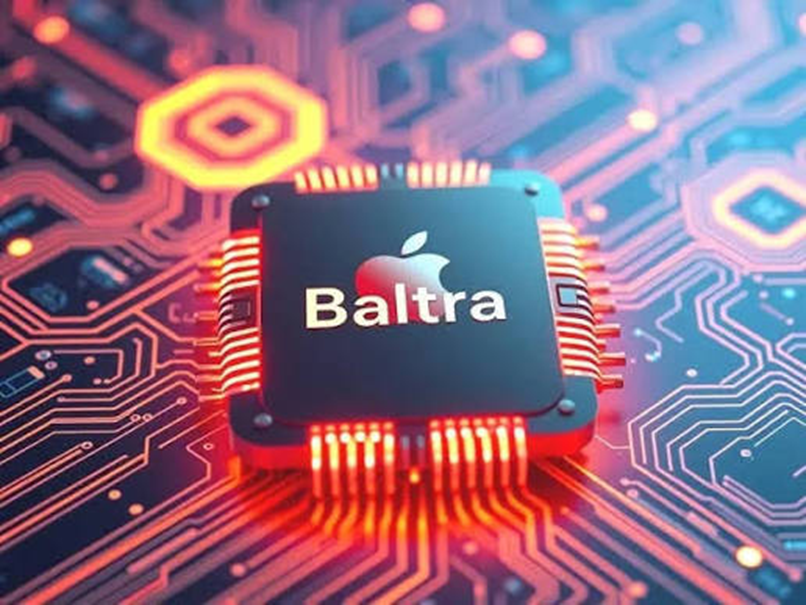
Reducing Dependency, Increasing Control
A main reason for Baltra is Apple’s goal to depend less on expensive and hard-to-find third-party AI hardware. By making its own server chips, Apple can lower data center costs and have more control over performance, security, and efficiency.
The chip will likely power Apple’s cloud-based AI services, especially those linked to “Apple Intelligence”. This should make AI tasks faster and more efficient across devices.
What This Means for Users
For users, this new technology offers real benefits: faster AI features, quicker Siri response times, better on-device AI tools, and improved cloud-based services.
- Better privacy: Relying more on Apple’s own systems means stronger data security.
- Better battery life: The new chips use less power on all devices.
- Smarter integration: AI features will work smoothly across iPhone, iPad, and Mac.

Caption: The Baltra chip will give users real benefits for the users (Pic Credit: Carlos Vassan)
The Bigger Picture
Baltra is not a standalone innovation. It is part of Apple’s bigger silicon plan, which also includes the upcoming M5 and M6 Pro/Max chips. By bringing its hardware and software together, Apple aims to compete strongly in the global AI market.
This strategy makes it clear that the future of AI will not just be about software rather it will be built on powerful, custom silicon designed in-house.
FAQs
Q 1 What is Apple’s ‘Baltra’ chip?
Apple’s Baltra is an upcoming in-house AI server chip designed to power the company’s cloud-based artificial intelligence services, including features under its broader AI ecosystem.
Q 2 Who is manufacturing the Baltra chip?
The chip is expected to be manufactured by TSMC using its advanced 3nm process technology, ensuring high performance and energy efficiency.
Q 3 Why is Apple developing its own AI server chips?
Apple aims to reduce dependence on third-party hardware like GPUs, lower operational costs, and gain tighter control over performance, security, and integration across its ecosystem.
Q 4 How will the Baltra chip benefit users?
Users can expect faster AI-driven features, improved privacy, better battery efficiency, and smoother integration across devices like iPhones, iPads, and Macs.
Q 5 When will Apple’s AI chips be available?
While there is no official launch date yet, reports suggest Apple is scaling production capacity with a target timeline around 2027 for large-scale deployment.