Highlights
- Vivo X500 Pro Max combines 50MP main + 200MP periscope + 50MP ultrawide, OPPO Find X10 Pro Max uses three 200MP sensors, while Xiaomi 18 Pro Max offers 200MP main + 200MP periscope + 50MP ultrawide with Leica optics.
- Vivo and OPPO run Dimensity 9600 Pro with 144Hz LTPO AMOLED panels, while Xiaomi opts for Snapdragon 8 Elite Extreme Gen 6, a 120Hz 6.9″ display, plus a 2.9″ rear screen.
- Xiaomi leads with 8,500mAh and 100W charging; Vivo and OPPO pack 8,000mAh with 90W/80W charging.
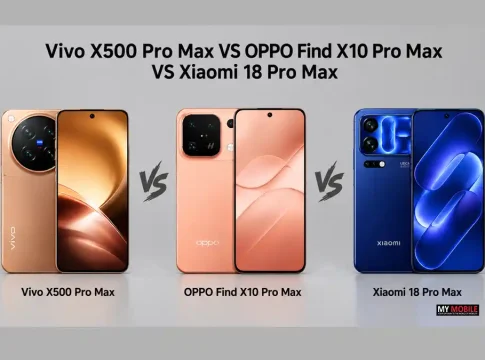
With Vivo X500 Pro Max, OPPO Find X10 Pro Max and Xiaomi 18 Pro Max all now officially out in the Chinese market, a comparison is inevitable. All three smartphones are feature-packed flagship smartphones with each model bringing strong cameras, high-end displays, powerful processors and large batteries. In this comparison, we look at their cameras, displays, performance and battery and charging capabilities to see how the three phones differ based on their known specifications.
Vivo X500 Pro Max vs OPPO Find X10 Pro Max vs Xiaomi 18 Pro Max: What’s Different?
| Features | Vivo X500 Pro Max | OPPO Find X10 Pro Max | Xiaomi 18 Pro Max |
| Display | 6.85″ LTPO AMOLED, 144Hz, 1440×3168, 507ppi, 4,400 nits | 6.78″ LTPO AMOLED, 144Hz, 1272×2772, 450ppi, 3,600 nits | 6.9″ LTPO AMOLED, 120Hz, 1208×2624, 418ppi, 4,000 nits + 2.9″ rear display |
| Processor | Dimensity 9600 Pro (2nm); Android 17, OriginOS 7; up to 5 major OS updates | Dimensity 9600 Pro (2nm); Android 17, ColorOS 17 | Snapdragon 8 Elite Extreme Gen 6 (2nm); Android 17, HyperOS 4 |
| Rear Camera | 50MP main + 200MP 3.5x periscope + 50MP 119° ultrawide; Zeiss optics | 200MP main + 200MP 3x periscope + 200MP ultrawide; Hasselblad | 200MP main + 200MP 3.2x periscope + 50MP 102° ultrawide; Leica |
| Video | Up to 8K 30fps, 4K 240fps; Dolby Vision, 10-bit Log | Up to 8K 30fps, 4K 120fps; Dolby Vision, 10-bit, LOG | Up to 8K 30fps, 4K 120fps; Dolby Vision, HDR10+, 10-bit LOG |
| Battery and Charging | 8,000mAh; 90W wired, 40W wireless; reverse wired/wireless | 8,000mAh; 80W wired, 50W wireless, 10W reverse wireless | 8,500mAh; 100W wired, 50W wireless, 27W reverse wireless |
| RAM and Storage | 12/16GB RAM; 256GB/512GB/1TB | 12/16GB RAM; 256GB/512GB/1TB | 12/16GB RAM; 256GB/512GB/1TB |
| Starting price | 6,999 yuan (~₹1,00,125) | 6,799 yuan (~₹97,075) | 6,999 yuan (~₹1,00,010) |
Camera Comparison
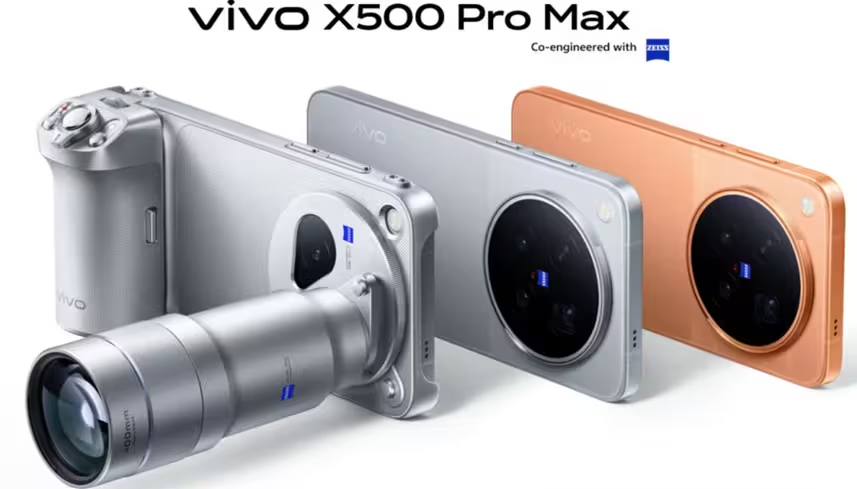
The Vivo X500 Pro Max features a triple-camera setup led by a 50MP f/1.6 main camera with a 1/1.28-inch sensor, PDAF and OIS. It is paired with a 200MP 85mm periscope telephoto camera offering 3.5x optical zoom, along with a 50MP 119-degree ultrawide camera with autofocus.
Vivo also lists Zeiss optics, Zeiss T* coating, Laser AF, a color spectrum sensor and 3D LUT import. For video, it supports up to 8K at 30fps, 4K at up to 240fps, 17 EV TrueDynamic Log, Dolby Vision HDR and 4K 120fps 10-bit Log.
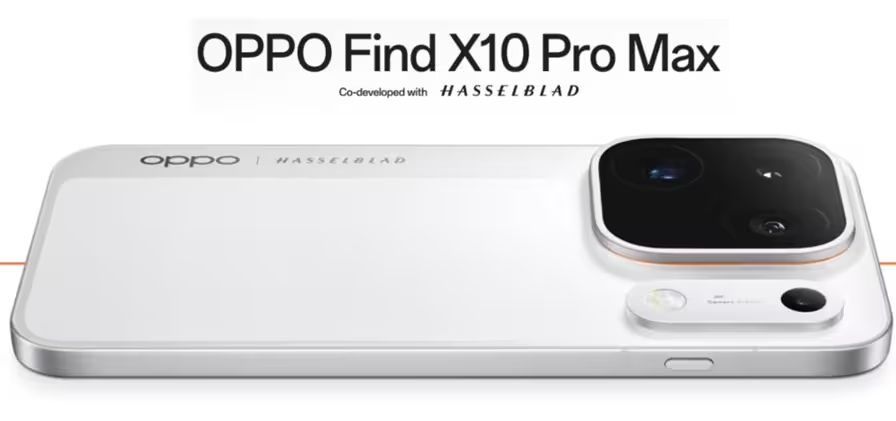
Meanwhile, the OPPO Find X10 Pro Max takes a more consistent approach with three 200MP cameras. Its 200MP f/1.5 main camera uses a 1/1.3-inch sensor, PDAF and OIS. The 200MP 70mm periscope telephoto camera has a 1/1.56-inch sensor, PDAF, OIS and 3x optical zoom, while the 200MP 13mm ultrawide also gets a 1/1.56-inch sensor and PDAF. The camera system includes Hasselblad Color Calibration, Laser AF, a color spectrum sensor and LUT preview. Video recording goes up to 8K 30fps and 4K 120fps with gyro-EIS, Dolby Vision, 10-bit video and LOG support.
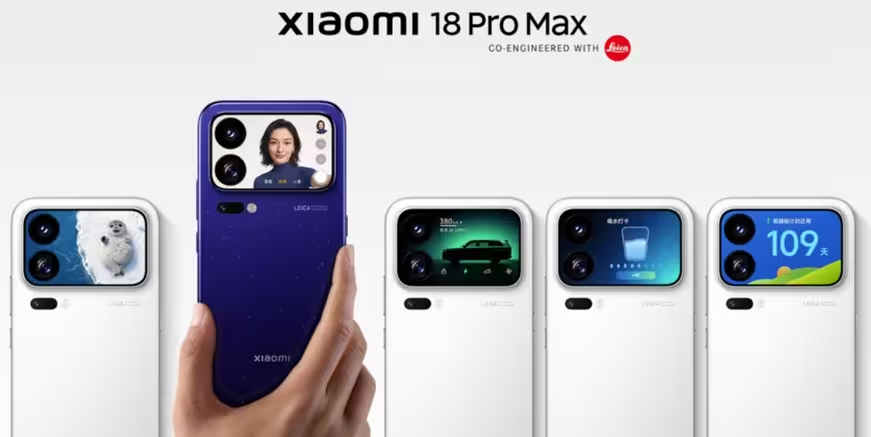
As for Xiaomi 18 Pro Max, it also uses a 200MP main and 200MP periscope telephoto camera but combines them with a 50MP ultrawide. Its 200MP f/1.7 main camera has a 1/1.28-inch sensor, dual-pixel PDAF and OIS. The 200MP 75mm periscope camera uses a 1/1.56-inch sensor, PDAF and OIS, with 3.2x optical zoom. The 50MP ultrawide offers a 102-degree field of view and PDAF.
Xiaomi adds Leica lenses, Laser AF and a color spectrum sensor. Its video capabilities include 8K 30fps HDR, 4K 120fps with HDR10+, 10-bit Dolby Vision HDR and 10-bit LOG, plus slow-motion recording up to 1920fps at 720p.
Processors and Performance Comparison
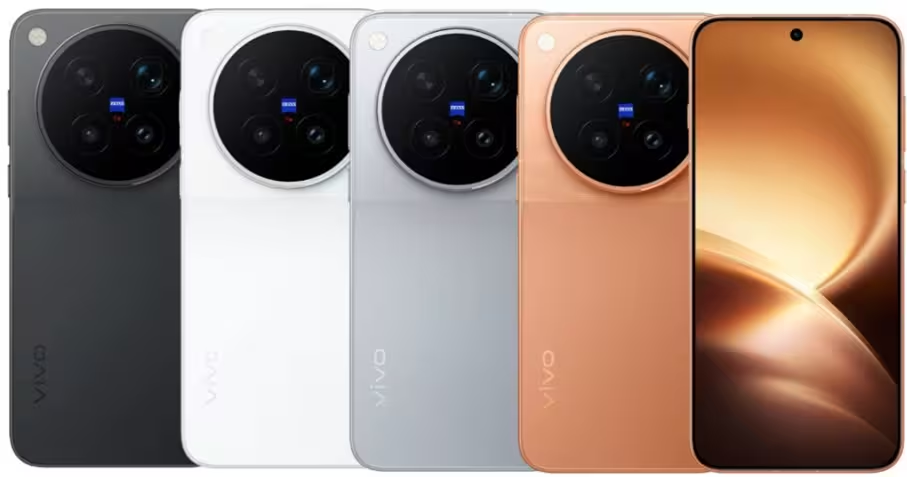
The Vivo X500 Pro Max and OPPO Find X10 Pro Max are evenly matched on the core chipset front as both are listed with the MediaTek Dimensity 9600 Pro built on a 2nm process. This means the two phones share the same stated processor platform, so the bigger differences between them will come from software and the hardware is tuned.
The Xiaomi 18 Pro Max takes a different route with Qualcomm’s Snapdragon 8 Elite Extreme Gen 6, which is also based on a 2nm process. So, unlike Vivo and OPPO, Xiaomi does not use the Dimensity 9600 Pro. Based purely on the provided specifications, all three phones use a 2nm flagship chipset but they are split between MediaTek and Qualcomm platforms.
On the software side, all three start with Android 17 but each uses its own interface. The Vivo X500 Pro Max runs OriginOS 7 and is listed with support for up to five major OS updates. The OPPO Find X10 Pro Max runs ColorOS 17, while the Xiaomi 18 Pro Max uses HyperOS 4.
Displays and Rear Screens Comparison
Vivo X500 Pro Max.
The Vivo X500 Pro Max comes with a 6.85-inch LTPO AMOLED display with a 144Hz refresh rate. It has a 1440 × 3168-pixel resolution and around 507ppi pixel density, making it the highest-resolution and highest-density display among the three. The panel supports 1 billion colors, HDR10+, Dolby Vision and Ultra HDR images. Brightness goes up to 2,000 nits in HBM and 4,400 nits peak. The display is protected by Armor Glass with Mohs level 4 protection.
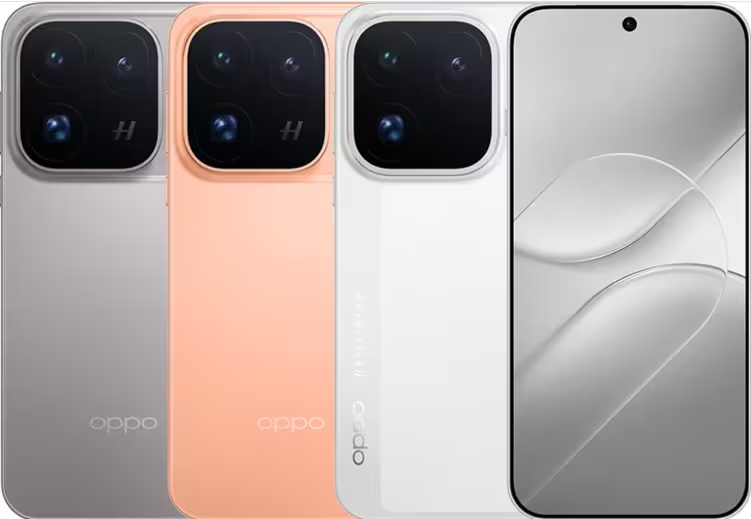
OPPO Find X10 Pro Max.
The OPPO Find X10 Pro Max, on the other hand, features a slightly smaller 6.78-inch LTPO AMOLED display with a 144Hz refresh rate and 1272 × 2772-pixel resolution with around 450ppi density. The screen supports 1 billion colors, Dolby Vision, HDR10+, HDR Vivid, BT.2020 and Ultra HDR images.
OPPO also adds 3840Hz PWM dimming. Brightness reaches 2,000 nits in HBM and 3,600 nits peak. The display is protected by Corning Gorilla Glass Victus 2.
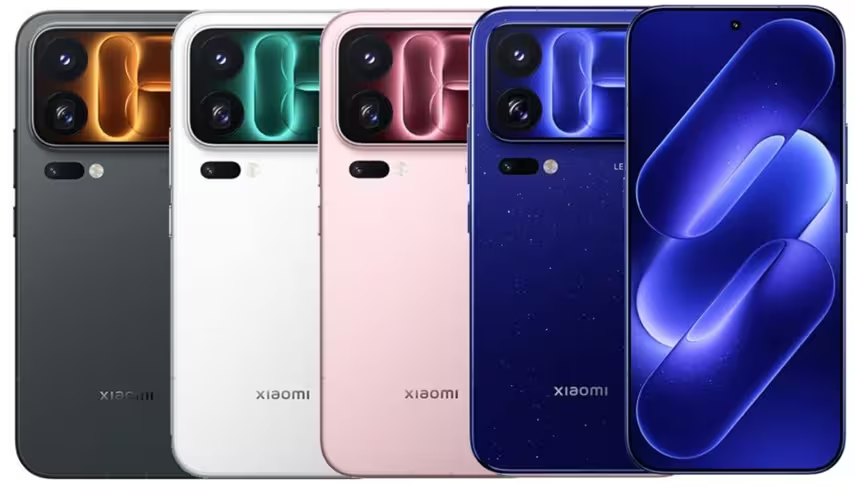
Xiaomi 18 Pro Max.
The Xiaomi 18 Pro Max has the largest main display of the three at 6.9 inches but uses a lower 120Hz refresh rate. Its LTPO AMOLED panel offers 1208 × 2624-pixel resolution and around 418ppi density. It supports 68 billion colors, Dolby Vision, HDR Vivid, HDR10+ and BT.2020, along with 2160Hz PWM. The screen can reach 4,000 nits peak brightness and is protected by Xiaomi Dragon Crystal Glass 3.
A major difference is also Xiaomi’s 2.9-inch secondary LTPO AMOLED display on the rear, which also supports 120Hz, Dolby Vision, HDR Vivid, HDR10+ and 4,000 nits peak brightness.
Battery and Charging Comparison
The Xiaomi 18 Pro Max has the largest battery in this comparison with an 8,500mAh silicon-carbon battery. It also offers the fastest wired charging among the three at 100W along with 50W wireless charging and 27W reverse wireless charging. It supports PD 3.0, QC 3+ and 100W PPS as well.
The Vivo X500 Pro Max and OPPO Find X10 Pro Max both pack 8,000mAh silicon-carbon batteries, so they are evenly matched in battery capacity. However, Vivo offers faster 90W wired charging, compared with OPPO’s 80W wired charging. Vivo also supports 40W wireless charging, while OPPO goes slightly higher with 50W wireless charging.
The charging features also differ when it comes to reverse charging. The Vivo X500 Pro Max supports both reverse wired and reverse wireless charging, although the provided details do not specify their output speeds. OPPO offers 10W reverse wireless charging, while Xiaomi supports significantly faster 27W reverse wireless charging.
RAM, Storage Options and Price Compared
All three phones offer 12GB and 16GB RAM configurations, with storage ranging from 256GB to 1TB. However, their pricing varies considerably as you move to higher storage and RAM combinations.
The Vivo X500 Pro Max starts at 12GB + 256GB for 6,999 yuan (around Rs. 1,00,125). Its range goes up to a 12GB + 1TB variant priced at 8,999 yuan, while the 16GB + 1TB Creator’s Package with satellite communication is the most expensive option at 12,999 yuan (around Rs. 1,85,975).
The OPPO Find X10 Pro Max has the lowest starting price among the three, with its 12GB + 256GB variant priced at 6,799 yuan (around Rs. 97,075). The range goes up to 16GB + 1TB for 8,999 yuan (around Rs. 1,28,490).
The Xiaomi 18 Pro Max starts at 6,999 yuan (around Rs. 1,00,010) for the 12GB + 256GB model. Its top-end 16GB + 1TB variant costs 9,999 yuan, while the special transparent edition with the same RAM and storage is priced at 10,999 yuan (around Rs. 1,57,165).
| Variant | Vivo X500 Pro Max | OPPO Find X10 Pro Max | Xiaomi 18 Pro Max |
| 12GB + 256GB | 6,999 yuan | 6,799 yuan | 6,999 yuan |
| 12GB + 512GB | 7,999 yuan | 7,499 yuan | 7,999 yuan |
| 16GB + 512GB | 8,499 yuan | 7,999 yuan | 8,999 yuan |
| 16GB + 1TB | – | 8,999 yuan | 9,999 yuan |
| 12GB + 1TB | 8,999 yuan | – | – |
| Special Editions | 16GB + 1TB Creator’s Package: 12,999 yuan | – | 16GB + 1TB Transparent Edition: 10,999 yuan |
As of now, India pricing and availability have not been confirmed for all three models.
Vivo X500 Pro Max vs OPPO Find X10 Pro Max vs Xiaomi 18 Pro Max – Verdict
The Vivo X500 Pro Max, OPPO Find X10 Pro Max and Xiaomi 18 Pro Max all bring flagship-level hardware but each takes a slightly different approach. Vivo stands out with its high-resolution display, Zeiss camera setup and strong video features, while OPPO focuses heavily on its triple-200MP camera system and Hasselblad imaging. Xiaomi brings the largest battery, fastest wired charging and a unique rear display, along with Leica-tuned cameras.
Overall, the choice comes down to what matters most to you as a buyer, camera and display features on Vivo, an all-200MP camera system on OPPO, or battery, charging and the extra rear display on Xiaomi. Based on the specifications shared here, all three are positioned as unique flagships rather than having one clear overall winner.
Also Read –
OPPO Find X10 Pro Max Launched With Triple 200MP Cameras, 2nm D9600 Pro Chip and 8,000mAh Battery
Vivo X500 Pro, X500 Pro Max Launched in China: Price, Specifications, Camera, Battery and Features