
Highlights
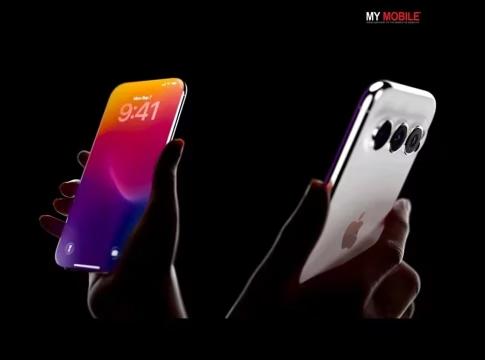
- Apple is reportedly developing a futuristic four-sided curved OLED display for iPhones expected to launch in 2028.
- The advanced display may use transparent Indium Zinc Oxide electrodes to improve brightness and reduce distortion on curved edges.
- Samsung Display and LG Display are said to be working on solutions for durability, touch sensitivity, and manufacturing challenges linked to the new technology.
Apple is reportedly working on one of the most ambitious iPhone display upgrades ever. According to recent reports, the company is collaborating with Samsung Display and LG Display to develop an advanced four-sided curved OLED panel for iPhones expected to arrive in 2028.
The technology could allow Apple to create an almost completely bezel-free smartphone with visuals flowing seamlessly across all edges of the device.
The upcoming display is also expected to use transparent electrode technology, which may significantly improve screen quality and efficiency. If successful, the innovation could redefine smartphone design in the premium segment.
What Is a Four-Sided Curved OLED Display?
A four-sided curved OLED display is a screen that bends on all four edges, unlike current curved displays that only wrap around the sides. In such a design, the visible screen area extends towards every edge of the phone, creating an immersive “all-screen” appearance.
The concept is considered a major step beyond today’s smartphones because even premium flagships still have visible bezels or flat borders around parts of the display. Apple’s reported design aims to minimise these bezels almost entirely, making the device look like a single continuous piece of glass.
Reports suggest the technology may debut in a future anniversary iPhone lineup around 2027-2028. Samsung and LG are reportedly developing specialised OLED panels that can maintain brightness and image quality even when bent aggressively around corners.
Apple’s Transparent Electrode Upgrade Explained
One of the biggest highlights of the project is Apple’s reported shift to transparent cathode technology using Indium Zinc Oxide (IZO). Current OLED panels generally use magnesium-silver alloy cathodes, but these materials can reduce light transmission and create image distortion near curved edges.
Apple is reportedly preparing a next-gen “4-sided bending” display for the 20th anniversary iPhone in 2028 👀
Details:
• Ultra-thin bezels on all 4 sides
• New IZO transparent electrode tech
• Better edge brightness & less display distortion
• Samsung Display & LG Display… pic.twitter.com/BgZ8WTDTuj— Saurav (@Saurav_DJ47) May 13, 2026
The transparent IZO layer is expected to improve light efficiency and allow the screen to maintain consistent brightness across all four bends. The technology may also help reduce power consumption while enabling thinner display structures.
According to reports, LG Display has already invested heavily in new OLED production infrastructure, while Samsung Display is also evaluating dedicated manufacturing lines for the advanced panels.
Challenges in Developing Four-Side Curved OLED Displays
Creating such a display is technically extremely challenging. One major issue is durability, as OLED panels become more vulnerable when bent around multiple edges. Excessive curvature can also affect touch sensitivity, structural strength, and long-term reliability.
Another challenge is display distortion. When light passes through sharply curved areas, brightness inconsistencies and colour shifts may appear, especially at the corners. Manufacturing yields could also become difficult, making production expensive and complex.
Battery placement and internal component arrangement are additional hurdles. A fully curved display leaves less room for antennas, cameras, sensors, and structural reinforcement inside the phone.
Possible Solutions Apple and Suppliers May Use
To overcome these problems, Apple and its suppliers are reportedly exploring transparent conductive materials like IZO, improved OLED encapsulation techniques, and advanced flexible substrates. The company is also rumoured to be testing under-display sensors and polariser-free OLED technology to maximise usable screen space.
Stronger ultra-thin glass protection, reinforced internal frames, and AI-based touch calibration could further help improve durability and usability. If these solutions succeed, Apple’s 2028 iPhone may become one of the most futuristic smartphones ever developed.
FAQs
Q 1. What is a four-sided curved OLED display?
A four-sided curved OLED display is a screen that bends on all four edges — top, bottom, left, and right — creating an almost bezel-free and immersive viewing experience.
Q 2. Which companies are working with Apple on the new display technology?
Reports suggest Apple is collaborating with Samsung Display and LG Display to develop the advanced OLED panels.
Q 3. What are the biggest challenges in developing four-sided curved displays?
Some major challenges include maintaining display durability, preventing brightness distortion at curved corners, improving touch sensitivity, and fitting internal components inside a fully curved design.
Q 4. When could Apple launch the iPhone with this display technology?
Industry reports indicate Apple could introduce early versions of the technology around 2027, while the more advanced transparent-electrode OLED display may arrive in 2028.
Also Read –
https://www.mymobileindia.com/samsungs-privacy-display-could-come-to-apple-macbooks-by-2029/