
Highlights
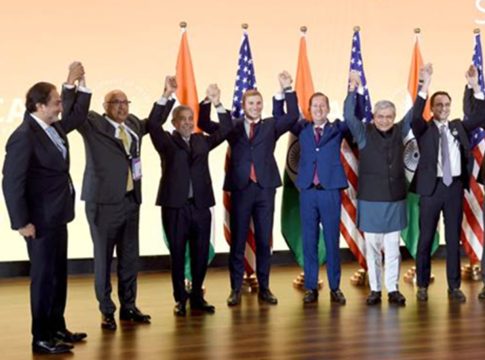
- India formally entered the US‑led coalition focused on securing semiconductor supply chains, critical minerals, and advanced AI infrastructure.
- Google’s CEO emphasised the US‑India partnership as crucial for the AI future.
- US and Indian officials framed Pax Silica as a democratic, values‑driven effort to reduce supply chain risks and shape emerging technologies.
(Image credit – PIB)
Sundar Pichai has backed India’s entry into the US-led Pax Silica initiative, underlining the strategic importance of technology collaboration between India and the United States. Speaking at a special event in New Delhi to mark India’s formal inclusion in the coalition, Pichai described the US-India partnership as critical at a time when artificial intelligence is reshaping the global economy.
India officially joined Pax Silica during the India AI Impact Summit 2026, reinforcing bilateral cooperation in securing semiconductor supply chains and advanced AI infrastructure.
Sundar Pichai Calls for Responsible AI Progress
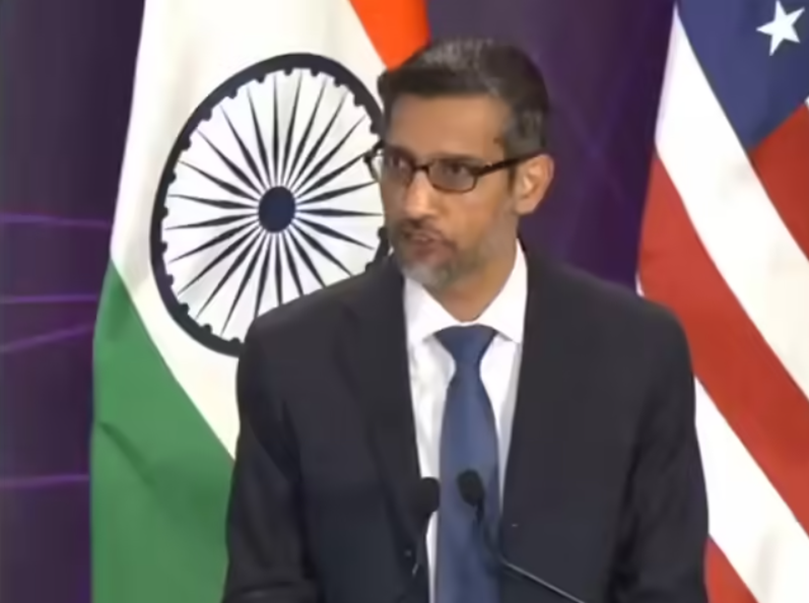
At the event, the Google CEO stressed the transformative potential of artificial intelligence while cautioning that its benefits are not guaranteed without global cooperation.
“We are on the cusp of an era of hyper progress and new discoveries, but the best outcomes are not guaranteed. we must work together to ensure the benefits of AI are available to everyone, and everywhere,” he said.
Expressing confidence in India’s AI growth trajectory, he added, “I believe India is going to have an extraordinary trajectory with AI and we are supporting with a full stack commitment, including products, scaling and infrastructure.”
Pichai also detailed Google’s ongoing AI initiatives in India. “We are working on building AI products and solutions for Indian consumers and businesses to empower India’s incredible developer community, we’ve already contributed 22 Gemma models to AI coach, and we are working closely with the government to bring AI applications with real world impact be through delivering timely monsoon forecast to farmers, helping healthcare workers screen for diseases like diabetic retinopathy or making information and services accessible in more languages, our current extends to reimagining the products, people use every day,” he added.
He further highlighted the wide range of Google’s partnerships in India, aimed at ensuring that AI benefits both individuals and businesses across the country.
India Formally Joins Pax Silica at AI Impact Summit 2026
(Image credit – PIB)
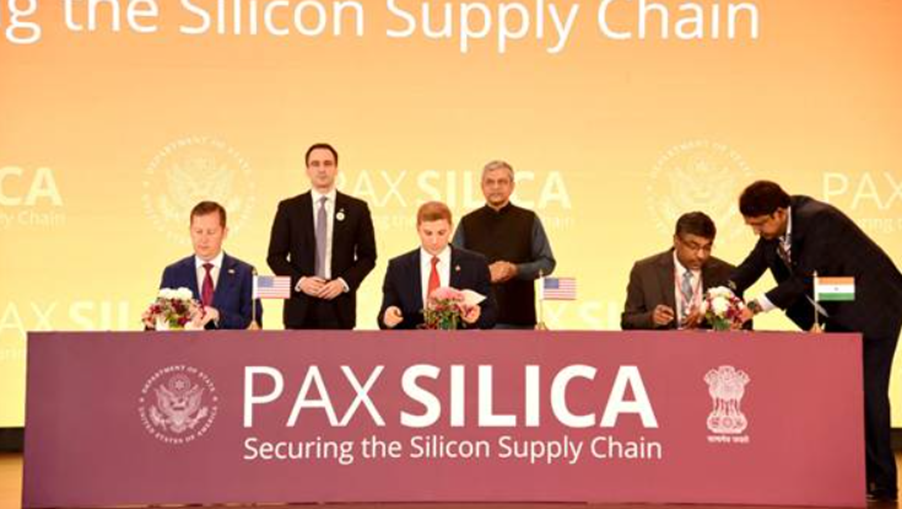
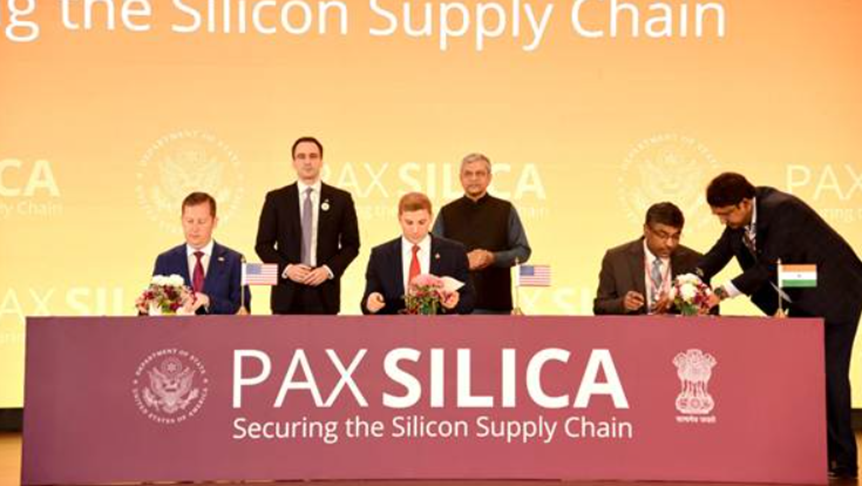
On India AI Impact Summit 2026 Day 5, India formally joined the strategic coalition led by the United States, Pax Silica. The initiative focuses on securing the entire “silicon stack,” covering everything from critical minerals and semiconductor fabrication to advanced AI systems and deployment infrastructure.
Pax Silica aims to reduce overconcentration in global supply chains, prevent economic coercion, and ensure that emerging technologies are shaped by open and democratic societies.
(Image credit – PIB)
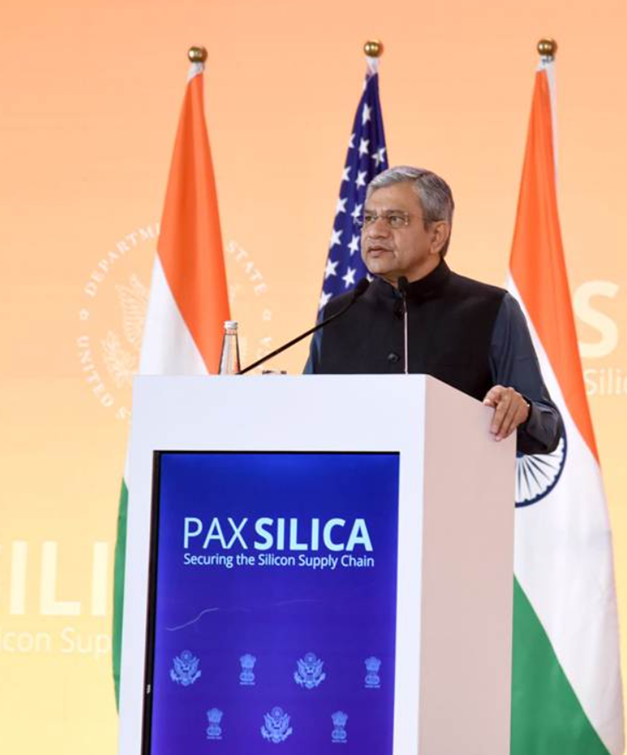
Addressing the gathering, Ashwini Vaishnaw, India’s Minister of Electronics and Information Technology, described the moment as historic. “We are not just holding a summit; we are building the future,” he said, adding that new foundations and opportunities are being created for the younger generation.
Reflecting on India’s growth since Independence, he noted, “If we look at India’s growth since 1947, we can all imagine the impact of compounding.” Highlighting India’s semiconductor ambitions, he stated, “Today, India’s talented engineers are designing the world’s most advanced two-nanometer chips. The semiconductor industry will require around one million new skilled professionals, and this is a very big opportunity for India.”
US Officials Call Pax Silica a Strategic Roadmap
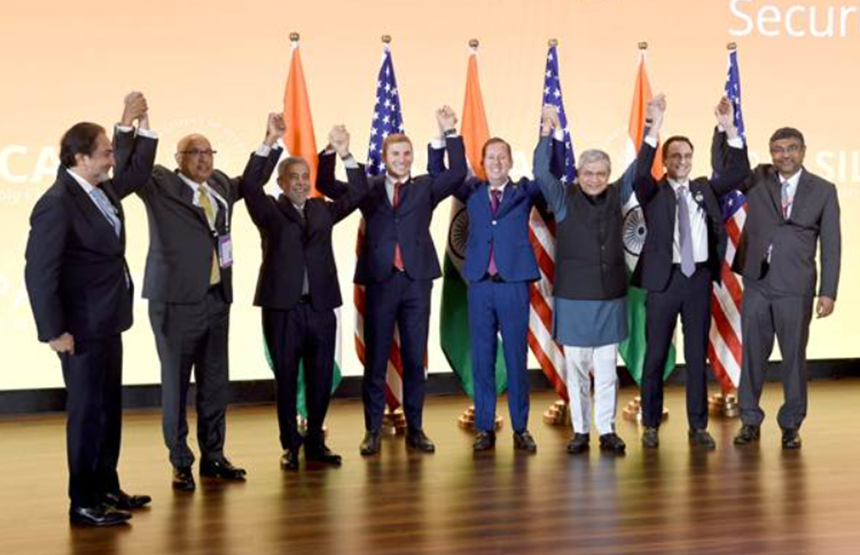
Speaking at the ceremony, Jacob Helberg, United States Under Secretary of State for Economic Growth, Energy, and the Environment, described the declaration as “not merely an agreement on paper, but a roadmap for a shared future.”
Invoking shared democratic values, he said, “Today, as we sign the Pax Silica declaration, we say no to weaponised dependency, and we say no to blackmail. Together, we affirm that economic security is national security.”
Outlining the broader ambition of the initiative, Helberg added, “We are securing the full stack of the future, the minerals deep in the earth, the silicon wafers in our labs and fabs, and the intelligence that will unleash human potential. Pax Silica is our declaration that the future belongs to those who build.”
Sergio Gor, U.S. Ambassador to India, echoed similar sentiments and described India’s entry into Pax Silica as both “strategic and essential.”
“Pax Silica is the coalition that will define the 21st century economic and technological order,” he said. “It is designed to secure the entire silicon stack, from the mines where we extract critical minerals, to the fabs where we manufacture chips, to the data centres where we deploy frontier AI.”
Highlighting the democratic foundation of the alliance, Ambassador Gor stated, “Pax Silica is about whether free societies will control the commanding heights of the global economy. We choose freedom. We choose partnership. We choose strength.”
(Image credit – PIB)
Industry Leaders Emphasise AI and Semiconductor Resilience
According to the reports, a high-level fireside chat featuring Shri S. Krishnan, Secretary MeitY; Sergio Gor; Sanjay Mehrotra, CEO of Micron Technology; and Randhir Thakur, CEO and MD of Tata Electronics, was held after the signing ceremony.
Shri S. Krishnan underscored India’s coordinated push across AI, semiconductors, and critical minerals, stating that the objective is “resilient collaboration with trusted partners who share our values,” positioning India firmly within the future global technology ecosystem.
Sergio Gor remarked, “The AI revolution is not on the horizon — it is already here.” Sanjay Mehrotra described the effort as a “shared commitment to building resilient, secure supply chains” and a “win-win ecosystem to advance AI for good.” Meanwhile, Randhir Thakur called Pax Silica “a timely and strategic step,” adding that the semiconductor journey has always been driven by “materials, innovation, and compute.”
FAQ
Q1. What is Pax Silica and why did India join it?
Answer. Pax Silica is a US‑led strategic alliance focused on securing the “silicon stack,” covering critical minerals, semiconductor fabrication, and advanced AI systems. India joined during the AI Impact Summit 2026 to strengthen its semiconductor ambitions, ensure resilient supply chains, and align with democratic partners shaping emerging technologies.
Q2. What role did Sundar Pichai highlight for India in AI?
Answer. Google CEO Sundar Pichai described the US‑India tech alliance as crucial for the AI future. He emphasised responsible AI progress and detailed Google’s initiatives in India.
Q3. How did US and Indian officials frame the significance of Pax Silica?
Answer. Leaders from both nations called Pax Silica a roadmap for a shared future, stressing economic security, democratic values, and resilience. India’s IT Minister Ashwini Vaishnaw highlighted opportunities in semiconductor design and workforce growth, while US officials described the coalition as essential to securing supply chains and ensuring free societies lead the global economy.